From 20 to 22 April 2026, the OVERHEAT project successfully carried out an important pilot demonstration at the Italian Maritime Academy Technology (IMAT) firefighting training facility in Italy, showcasing innovative technologies designed to improve maritime fire detection, emergency response coordination, and operational safety. The activity brought together several OVERHEAT partners, including TopView, Peopletrust, the Italian Maritime Academy Technology(IMAT), Institute for Sustainable Society and Innovation (ISSNOVA) and SeaTopic.
The pilot represented a key step in validating the OVERHEAT integrated approach for maritime fire prevention and emergency management. The demonstration focused on the operational integration between the IoT sensor technologies developed by Peopletrust and the drone systems provided by TopView within the OVERHEAT digital platform. The objective was to demonstrate how advanced monitoring technologies, combined with unmanned aerial systems, can support firefighters and vessel operators in responding more rapidly and effectively to fire incidents involving cargo containers and maritime environments.
The Italian pilot also built upon previous preparatory activities conducted earlier in 2026 at IMAT facilities, where partners including IMAT, Peopletrust, ILOT, and TopView worked on simulation testing for the Genoa and Gdynia operational scenarios and carried out site inspections linked to gyroscopic platform activities on a real ship environment. These preliminary activities supported the tuning of operational scenarios and the refinement of technical requirements before the live demonstration phase.
One of the most innovative aspects of the demonstration was the seamless integration of IoT sensors with drone technologies through the OVERHEAT platform. During the exercise, operators were able to deploy drones with only two clicks directly from the platform interface, significantly simplifying operational procedures and reducing response times. Once deployed, the drones provided real-time visual support and enabled the rapid identification of containers affected by fire or abnormal thermal conditions. At the same time, sensor alerts generated by the IoT system were verified directly through drone inspections, creating a coordinated and highly efficient emergency response workflow.
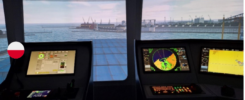
Another important innovation demonstrated during the pilot was the integration with Electronic Chart Display and Information System (ECDIS) systems, allowing drone positions to be visualised directly on operational maritime maps. This functionality improves coordination between emergency responders, vessel operators, and control rooms by providing enhanced situational awareness during critical incidents. The ability to combine real-time sensor data, drone imaging, and navigational information into a single operational picture represents one of the key added values of the OVERHEAT solution.
The pilot confirmed the strong potential of the OVERHEAT technologies to improve emergency response efficiency in maritime contexts. Firefighters are expected to benefit from faster and more reliable detection systems, improved coordination during emergency operations, and better-informed decision-making supported by real-time data. More broadly, the integrated system can contribute to enhancing safety for crews, port operators, vessels, cargo, and maritime infrastructure while reducing operational risks associated with container fires and hazardous incidents at sea.