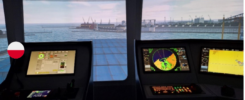
The German OVERHEAT use case was carried out at the Institute of Shipping Economics and Logistics (ISL) Simulation Center in Bremen, where partners conducted an advanced simulation exercise focused on emergency response and decision-making for vessels in distress. The simulation activities took place between November 2025 and February 2026 and involved the German project partners Institute for Safety and Security Studies (ISaSS) and Institute of Shipping Economics and Logistics (ISL).
The aim of the simulation was to demonstrate how rapid and coordinated decisions during maritime emergencies can significantly improve operational outcomes and reduce risks for vessels, cargo, human life, and the marine environment. To support the analysis, the partners used a historical case involving a vessel in distress requesting a Place of Refuge (PoR).
Using advanced simulation technologies, the exercise evaluated how earlier interventions and faster decision-making processes could influence the overall emergency response timeline. The simulation results showed that the final Place of Refuge in the selected case study could potentially have been reached in only 45% of the time required during the real historical event. Furthermore, the nearest available Place of Refuge might have been reached in just 26% of the original response time.
The exercise also highlighted how additional measures – such as advanced firefighting equipment and improved emergency drills – could further enhance response efficiency and reduce operational risks beyond the scope of the simulation itself. The use case therefore demonstrated the importance of combining simulation-based planning, operational preparedness, and coordinated emergency management to improve maritime safety.
The expected benefits of the proposed approach extend across the maritime sector. Seafarers can benefit from reduced exposure to life-threatening risks thanks to faster emergency detection and response procedures. Shipowners and cargo operators may reduce damage to assets and cargo, while ports and maritime logistics operators can benefit from reduced disruption to shipping routes. The environmental impact of maritime accidents can also be minimized through faster interventions and improved emergency coordination.
The German use case confirmed the strong value of simulation-driven decision support for maritime emergency management and demonstrated how anticipatory response strategies can contribute to safer, more resilient, and more efficient maritime operations.