Containership fires pose a serious threat to maritime safety. To address this growing concern, the OVERHEAT project, supported by the European Union, conducted a series of rigorous tests at the IMAT facility to explore innovative fire detection solutions.
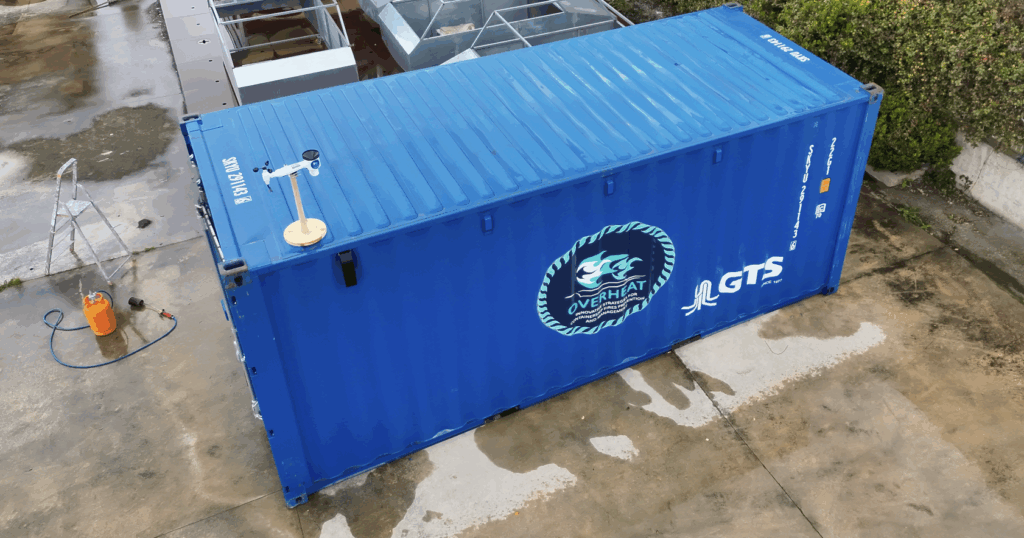
The core of the testing, held in March 2025, focused on simulating real fire scenarios inside shipping containers using smoke machines, heating devices, and impact tests. A key goal was to understand how different environmental conditions—such as wind, rain, and lighting—affect the detection of fire-related gases and smoke. Special sensors, like the advanced BME688 by BOSCH, were used to monitor air quality and identify early signs of combustion.
PeopleTrust, the OVERHEAT partner leading the experimental sessions, oversaw the design, implementation, and analysis of the tests. Their team installed sensors in strategic locations outside the containers and developed a smart detection algorithm using the collected data. TopView project partner led the design and development of drone hangars and recharging stations for both port and ship use. This test has been crucial for the development of the software to manage drone missions, safety procedures, and AI-based fire detection, ensuring full integration with the OVERHEAT control system. Both Topview and PeopleTrust played a central role in driving the research forward.
The results were promising:
- The sensor system was able to detect smoke from both wood and fuel fires with over 95% accuracy. Importantly, it could distinguish between different types of fires and adapt to changing conditions. However, challenges emerged, particularly with sensor durability under high temperatures. Some devices were damaged, pointing to the need for more robust designs.
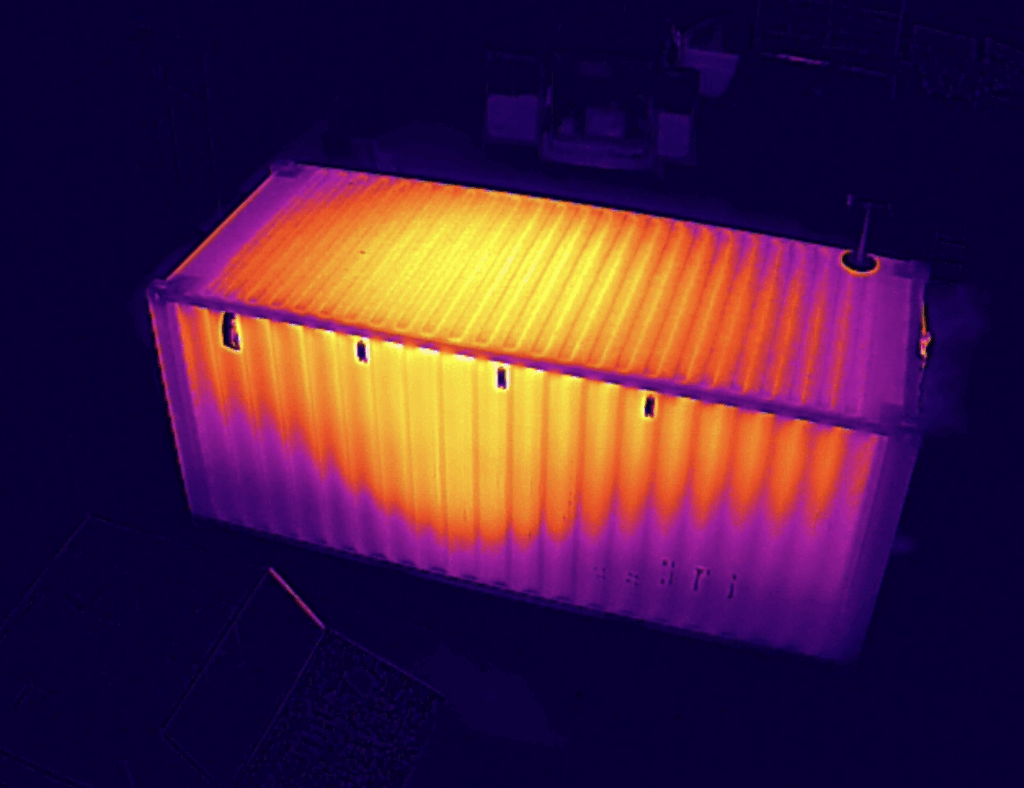
- The UAS successfully detected containers’ fire from outside: temperature was significantly higher compared to the ones heated by the sun, more than 100 C°. On operational side the UAS thermal camera was capable to detect containers’ heating even at narrow angles.
One of the key takeaways was the importance of gathering more real-world data from ports and ship environments to improve accuracy and reduce false alarms. The team also recognized the need for stronger, heat-resistant sensor casings.
The next steps include building heat-resistant sensor casings and gathering data from real environments like ships and ports. The team plans to test the system in the field, improve real-time data transmission, and collaborate with institutions to advance fire prevention technologies.
The findings from the OVERHEAT project have broader implications for maritime safety. They pave the way for smarter, more responsive fire detection systems that could become standard practice on ships, helping to prevent fires before they spread and saving lives and cargo in the process.
#Consortium Container Security Maritime Safety Maritime Sustainability Tests